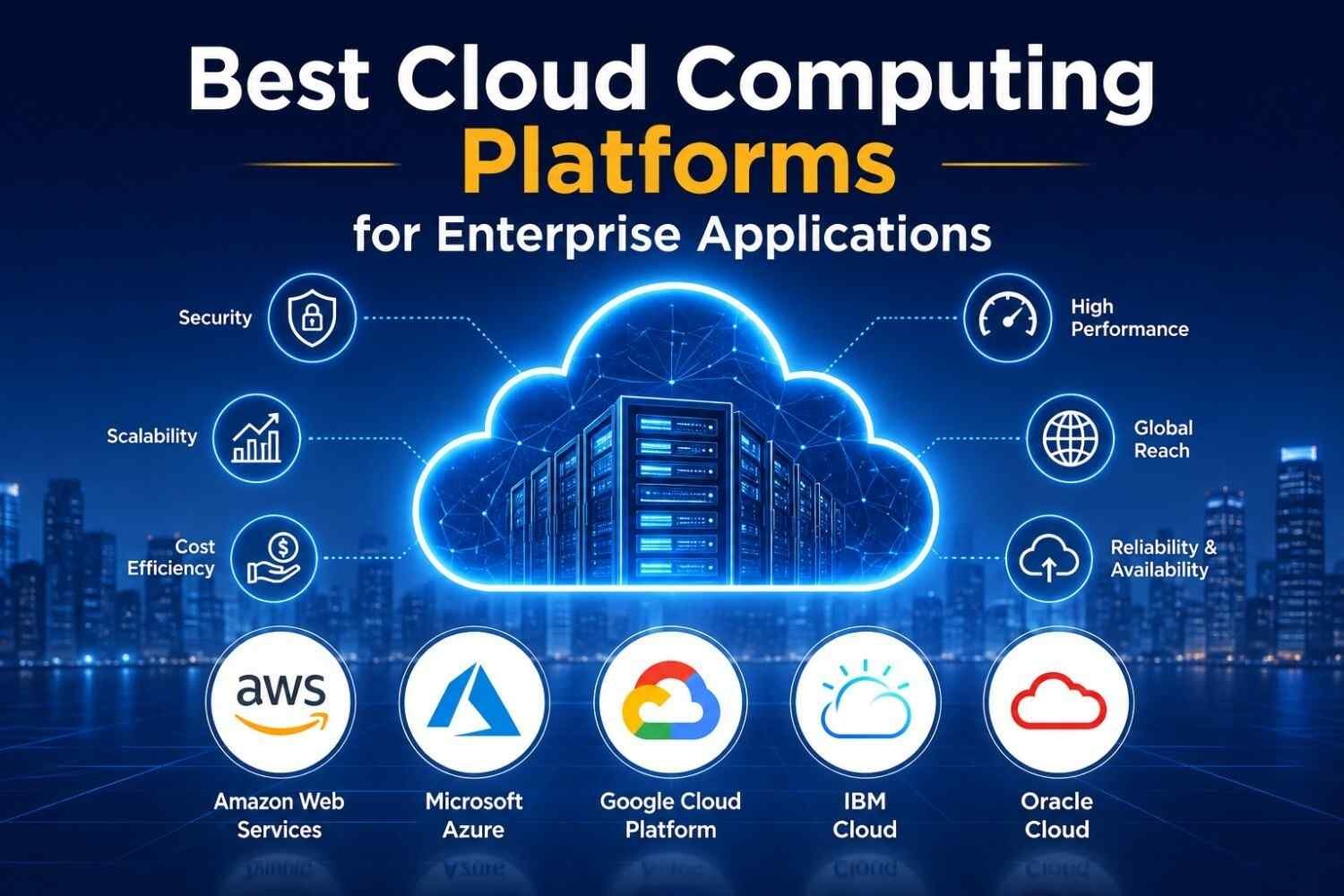
Modern enterprises depend on cloud technology to improve performance, reduce infrastructure costs, and accelerate digital transformation. Whether you're running ERP software, CRM platforms, AI applications, financial systems, or customer-facing services, selecting the best cloud computing platform for enterprise applications is essential for long-term success.
Cloud providers now offer powerful computing resources, AI capabilities, enterprise-grade security, and global scalability that allow businesses to innovate faster than ever before.
Why Enterprises Are Moving to Cloud Computing
Businesses are rapidly replacing traditional on-premise infrastructure with cloud services because cloud platforms provide lower infrastructure costs, better scalability, improved disaster recovery, high availability, faster software deployment, enterprise-grade cybersecurity, AI and machine learning services, global data centers, compliance with international regulations, and remote workforce support.
What Makes a Great Enterprise Cloud Platform?
When evaluating enterprise cloud providers, organizations should consider security, global infrastructure, AI integration, compliance certifications, scalability, performance, pricing, hybrid cloud support, multi-cloud compatibility, and enterprise support.
Top Cloud Computing Platforms for Enterprise Applications
1. Amazon Web Services (AWS)
AWS remains the world's largest cloud computing provider. Best for large enterprises, AI startups, SaaS companies, banking, healthcare, and government. Key Features: 240+ cloud services, EC2 Virtual Machines, Amazon S3 Storage, Lambda Serverless Computing, AI & Machine Learning, Database Services, Enterprise Security, and Global CDN. Pros: Largest ecosystem, excellent scalability, highly secure, massive global infrastructure. Cons: Complex pricing, learning curve.
2. Microsoft Azure
Azure is ideal for organizations already using Microsoft technologies. Best for Windows environments, Microsoft 365 integration, enterprise IT, and government organizations. Features: Active Directory, Azure AI, Kubernetes, SQL Database, Hybrid Cloud, and Virtual Machines. Pros: Excellent Microsoft integration, strong security, hybrid cloud leadership. Cons: Pricing can become expensive.
3. Google Cloud Platform (GCP)
Google Cloud is known for analytics, AI, and Kubernetes. Best for AI companies, big data, machine learning, and analytics. Features: BigQuery, Vertex AI, Kubernetes Engine, Cloud Run, and Cloud SQL. Pros: Powerful AI tools, fast global network, great analytics. Cons: Smaller enterprise ecosystem than AWS.
4. Oracle Cloud Infrastructure (OCI)
OCI focuses on enterprise databases and ERP workloads. Best for Oracle ERP, financial institutions, and large databases. Features: Oracle Autonomous Database, AI Services, High Performance Computing, and Cloud ERP. Pros: Excellent Oracle integration, cost-effective computing. Cons: Smaller ecosystem.
5. IBM Cloud
IBM Cloud is popular among regulated industries. Best for healthcare, banking, and government. Features: Watson AI, Hybrid Cloud, Red Hat OpenShift, and Kubernetes. Pros: Enterprise security, hybrid cloud expertise. Cons: Smaller market share.
6. Alibaba Cloud
Alibaba Cloud dominates many Asia-Pacific markets. Best for international ecommerce, Asian businesses, and global expansion. Features: Elastic Compute, AI Services, CDN, and Security Center.
7. DigitalOcean
Ideal for startups and developers. Features: Simple pricing, Managed Kubernetes, App Platform, and Object Storage.
Comparison Table
| Platform | Best For | AI Services | Hybrid Cloud | Enterprise Security |
|---|---|---|---|---|
| AWS | Large Enterprises | ⭐⭐⭐⭐⭐ | ⭐⭐⭐⭐ | ⭐⭐⭐⭐⭐ |
| Azure | Microsoft Businesses | ⭐⭐⭐⭐⭐ | ⭐⭐⭐⭐⭐ | ⭐⭐⭐⭐⭐ |
| Google Cloud | AI & Analytics | ⭐⭐⭐⭐⭐ | ⭐⭐⭐⭐ | ⭐⭐⭐⭐ |
| Oracle Cloud | ERP | ⭐⭐⭐⭐ | ⭐⭐⭐⭐ | ⭐⭐⭐⭐⭐ |
| IBM Cloud | Banking | ⭐⭐⭐⭐ | ⭐⭐⭐⭐⭐ | ⭐⭐⭐⭐⭐ |
| Alibaba Cloud | APAC | ⭐⭐⭐⭐ | ⭐⭐⭐ | ⭐⭐⭐⭐ |
| DigitalOcean | Startups | ⭐⭐⭐ | ⭐⭐ | ⭐⭐⭐⭐ |
Enterprise Cloud Security Best Practices
- Multi-Factor Authentication (MFA)
- Identity and Access Management (IAM)
- Zero Trust Security
- Data Encryption
- Backup and Disaster Recovery
- Continuous Monitoring
- Security Information and Event Management (SIEM)
- Compliance Audits
Benefits of Cloud Computing for Enterprises
- Lower operational costs
- Faster deployment
- High availability
- Better business continuity
- Global scalability
- Enhanced collaboration
- AI-driven innovation
- Automatic software updates
- Flexible pricing
- Reduced maintenance
Emerging Cloud Computing Trends in 2026
- AI-Native Cloud Platforms
- Edge Computing
- Serverless Architecture
- Sustainable Green Cloud
- Confidential Computing
- Industry-Specific Cloud Solutions
- Quantum Computing Integration
- Multi-Cloud Management
- Cloud FinOps
- Generative AI Services
Frequently Asked Questions (FAQs)
Which cloud platform is best for enterprise applications?
AWS, Microsoft Azure, and Google Cloud Platform are widely considered the top choices because of their scalability, global infrastructure, AI services, and enterprise-grade security.
Which cloud provider offers the best security?
AWS, Microsoft Azure, IBM Cloud, and Oracle Cloud all provide advanced security features, compliance certifications, encryption, and identity management suitable for enterprise workloads.
Is a multi-cloud strategy better than using a single cloud provider?
A multi-cloud strategy can improve resilience, avoid vendor lock-in, and optimize costs, but it also increases management complexity. The right choice depends on your organization's needs.
Conclusion
Choosing the best cloud computing platform for enterprise applications depends on your business goals, budget, compliance requirements, and existing technology stack.
AWS is ideal for organizations seeking the broadest range of cloud services and global scalability. Microsoft Azure is an excellent fit for enterprises invested in the Microsoft ecosystem and hybrid cloud. Google Cloud stands out for AI, machine learning, and advanced analytics. Oracle Cloud is well suited for ERP, databases, and Oracle-based workloads. IBM Cloud is a strong option for highly regulated industries requiring hybrid cloud capabilities. Alibaba Cloud is a compelling choice for businesses expanding across the Asia-Pacific region. DigitalOcean provides a simple, developer-friendly platform for startups and small-to-medium businesses.
By evaluating performance, security, pricing, and long-term scalability, enterprises can select a cloud platform that supports innovation, operational efficiency, and sustainable growth while maximizing the value of their digital transformation initiatives.