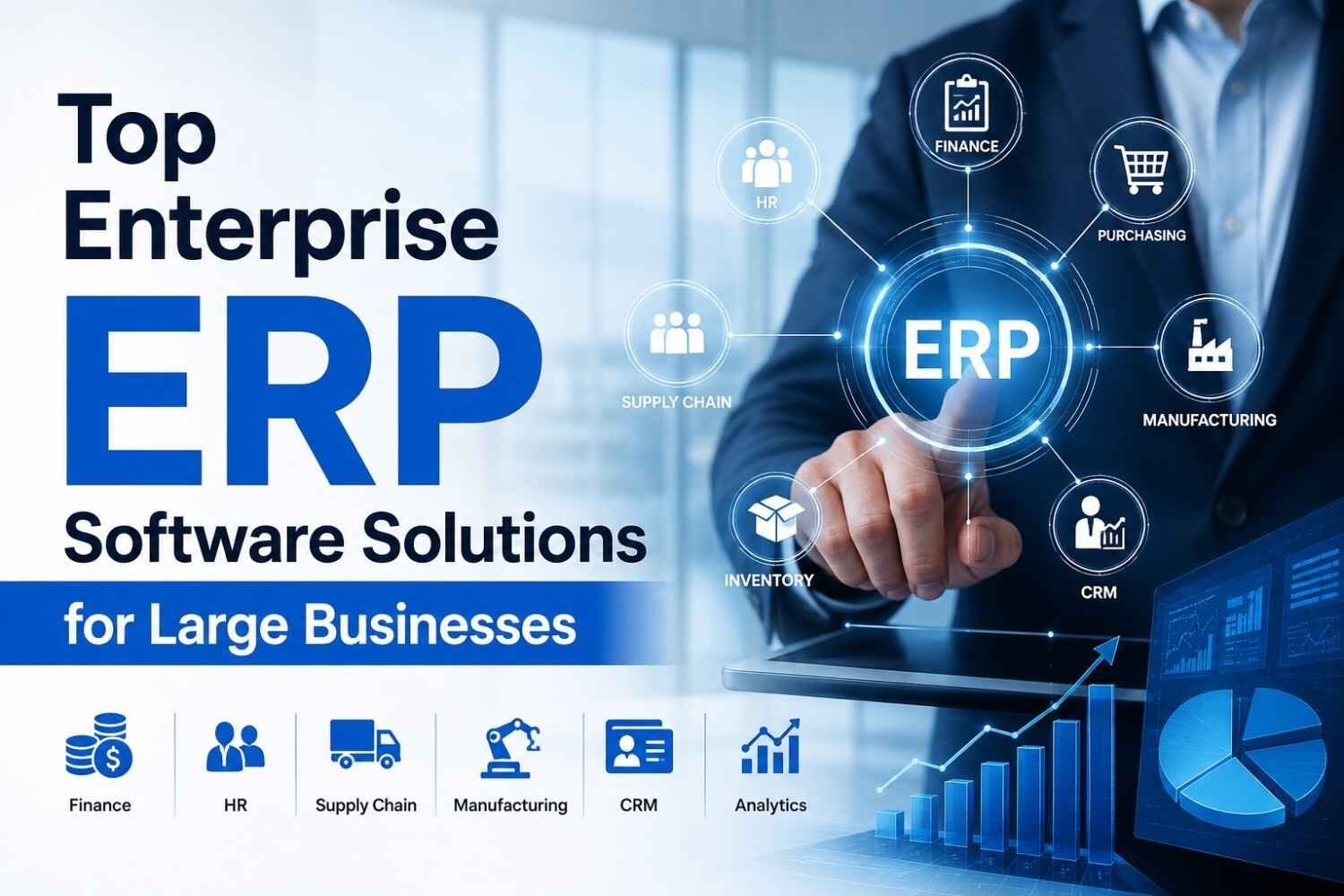
Managing a large enterprise involves far more than accounting or inventory. Modern organizations must coordinate finance, procurement, manufacturing, supply chain, human resources, customer relationships, compliance, analytics, and global operations from a single platform.
This is where Enterprise ERP Software becomes an essential investment.
The best Enterprise ERP Software Solutions help organizations automate business operations, reduce operational costs, improve productivity, strengthen security, and make better decisions using real-time data and AI-powered analytics.
What is Enterprise ERP Software?
Enterprise Resource Planning (ERP) software is an integrated business management platform that connects every department into one centralized system.
Instead of using separate software for accounting, inventory, HR, sales, procurement, and manufacturing, an ERP solution combines everything into one database. Large enterprises rely on ERP platforms to manage global operations, improve productivity, reduce manual work, automate workflows, increase profitability, enhance compliance, improve forecasting, and support AI-driven decision making.
Why Large Businesses Need ERP Software
As organizations grow, spreadsheets and disconnected software become difficult to manage. Enterprise ERP provides centralized business data, real-time reporting, AI-powered forecasting, financial management, procurement automation, supply chain visibility, manufacturing optimization, customer relationship management, compliance management, and better cybersecurity.
Top Enterprise ERP Software Solutions
1. SAP S/4HANA
Best For: Global enterprises and Fortune 500 companies
Key Features: AI-powered analytics, financial management, manufacturing ERP, procurement, supply chain management, inventory control, HR management, cloud deployment, and predictive analytics.
Advantages: Highly scalable, excellent global support, industry-specific modules, and strong compliance capabilities.
2. Oracle Fusion Cloud ERP
Best For: Global enterprises requiring cloud-first ERP
Key Features: Financial management, procurement, risk management, AI automation, performance analytics, project management, and supply chain planning.
Benefits: Cloud-native, excellent automation, high security, and AI-powered forecasting.
3. Microsoft Dynamics 365 Finance & Operations
Best For: Organizations already using Microsoft products
Features: Microsoft AI integration, Power BI reporting, Office integration, financial management, HR, manufacturing, inventory, and sales.
Advantages: Easy integration, excellent reporting, cloud deployment, and strong security.
4. Infor CloudSuite
Ideal For: Manufacturing, Distribution, Healthcare, Hospitality
Features: Industry-specific ERP, AI recommendations, warehouse management, supply chain optimization, and financial planning.
5. IFS Cloud ERP
Best For: Engineering, Construction, Energy, Telecommunications
Key Features: Asset management, field service, manufacturing, maintenance, and AI analytics.
6. Epicor ERP
Best For: Manufacturing companies, metal industries, automotive suppliers, and distribution businesses
Features: Production planning, inventory, warehouse, accounting, CRM, and analytics.
Essential ERP Features Every Large Business Should Look For
- Financial Management – Track income, expenses, taxes, budgeting, and financial forecasting.
- Human Resource Management – Manage payroll, employee records, attendance, recruitment, and performance.
- Supply Chain Management – Monitor suppliers, shipments, warehouses, logistics, and inventory.
- Procurement Automation – Automate purchasing approvals, vendor management, and procurement workflows.
- CRM Integration – Manage leads, sales, marketing campaigns, and customer service.
- AI & Machine Learning – AI forecasting, predictive maintenance, smart inventory planning, automated reporting, and intelligent recommendations.
- Business Intelligence – Real-time dashboards, KPIs, and executive reports.
Cloud ERP vs On-Premise ERP
Cloud ERP
Pros: Lower upfront cost, automatic updates, remote access, better scalability, faster deployment
Cons: Subscription pricing, internet dependency
On-Premise ERP
Pros: Complete infrastructure control, custom security, greater flexibility
Cons: Higher maintenance costs, expensive hardware, longer implementation
How to Choose the Best ERP Software
Consider business size, industry requirements, cloud vs on-premise, security features, AI capabilities, scalability, integration options, vendor support, total implementation cost, and long-term ROI.
Future Trends in Enterprise ERP
- Artificial Intelligence
- Machine Learning
- Predictive Analytics
- Intelligent Automation
- IoT Integration
- Blockchain Security
- Robotic Process Automation
- Low-Code Customization
- ESG Reporting
- Advanced Business Intelligence
Frequently Asked Questions (FAQ)
Which ERP software is best for large businesses?
Leading options include SAP S/4HANA, Oracle Fusion Cloud ERP, Microsoft Dynamics 365, Infor CloudSuite, IFS Cloud ERP, and Epicor ERP. The best choice depends on your industry, budget, and operational needs.
Is Cloud ERP better than On-Premise ERP?
Cloud ERP offers faster deployment, lower infrastructure costs, and easier scalability. On-premise ERP provides greater control and may suit organizations with strict regulatory or data residency requirements.
How long does ERP implementation take?
Depending on the size and complexity of the business, implementation can take anywhere from six months to over two years.
Conclusion
Enterprise ERP software has become a strategic foundation for modern organizations. By integrating finance, operations, supply chain, HR, procurement, and analytics into one intelligent platform, businesses can improve efficiency, reduce costs, strengthen compliance, and support long-term growth.
Whether you're evaluating SAP S/4HANA, Oracle Fusion Cloud ERP, Microsoft Dynamics 365, Infor CloudSuite, IFS Cloud ERP, or Epicor ERP, the right solution should align with your industry, business goals, scalability requirements, and digital transformation strategy. Investing in a modern, AI-powered ERP platform today will position your enterprise for greater agility and sustained success in the years ahead.